Skip to content
The engine kicks in loud. Under you, the bike vibrates strong. Twist the grip and it jumps forward fast. A rush hits, mixed with slight worry. That’s how learning to ride a dirt bike really goes.
It might seem tough at first, yet it’s something everyone can pick up. Meant for new folks like you, this walkthrough keeps things clear. Each part gets split into small bits that make sense. Soon enough, you’ll stand tall, prepped for day one.
The 3 Golden Rules for Your First Ride
First off, forget controls for a sec and let’s go over three key things. Stick to these and you stay outta trouble while picking up skills quicker.
Think of your bike like a wild animal. It’s strong, fast, maybe a bit unpredictable. Treat it right so it doesn’t turn on you. Handle it with care because one slip can change everything. When you show caution, the ride stays smooth.
Take it easy at first. Most beginners rush. But here’s the trick: move slow to win later. Gentle twists, soft stops, no jerking the clutch. That calm flow is what actually gets you speed without losing grip.
Keep your eyes where you want to go. This tops all biking tips. The machine goes wherever your gaze points. Focus on a stone, crash into it. Instead, fix your sight down the trail.

Getting to Know Your Dirt Bike
Get to know the machine a bit. Understanding these pieces helps you start taking charge.
The Controls
Handlebars: These help you control direction. Just like on a bicycle, give them a shove to change your path.
Throttle: Twist the grip on the right bar to power up the ride. Pull it toward you to speed forward. Let go a bit to ease off. That’s how you control pace.
Front Brake: The lever on the right bar is for stopping the front wheel. Pull it to slow down. It gives strong grip when you need quick stops.
Clutch: This lever on the left grip is used when changing gears.
Rear Brake Pedal: The pedal near your right foot handles the back brake. Use it to slow down from behind.
The Shifter
This little lever near your left foot moves up or down to shift gears. Lots of beginner bikes run on auto, so yours might skip this part altogether.
Your First Steps: Getting Ready to Ride
You’re on the seat. Now start rolling.
Step 1: Start the Engine
Your teacher will walk you through it. Most times, all you do is twist a key then hit a switch. Wait around sixty seconds while the bike warms up.
Step 2: Find the Friction Point
This one matters a lot. Put the bike into first gear, then ease off the clutch slowly until you notice the machine trying to roll ahead. That’s when things start gripping. You’re hitting the zone where power from the motor begins to catch.
Step 3: Practice the Friction Zone
Ease the clutch slowly. Don’t dump it fast. Work within that small window where it’s neither fully on nor off. That little area helps you roll forward smoothly. Keep practicing there to avoid stalling the engine.
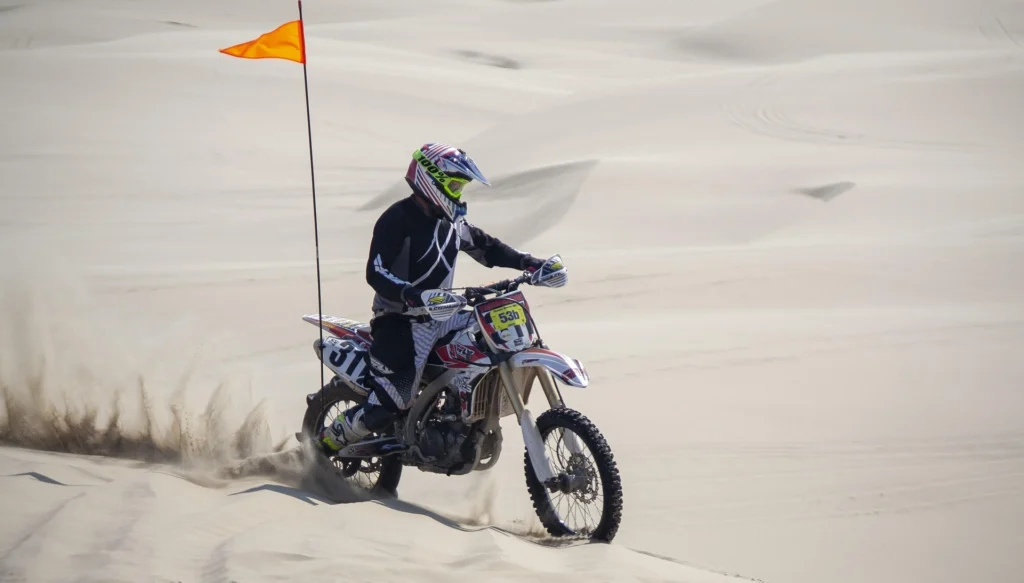
Learning to Ride: The Core Skills
Here’s where things get interesting. These abilities are the ones you’ll keep working on over and over.
Skill 1: Using the Throttle and Clutch
This one matters more than anything else. Do it like this if you want it done well:
- Pull the clutch toward you.
- Shift the bike into first gear by pressing down.
- Gradually release the clutch until you hit the bite point.
- When you sense the bike tugging, add just a touch of throttle.
- Let the clutch out gradually while giving it more gas.
The aim is to get the bike rolling without jerks. More flow, less hop. Instead of bouncing ahead, it should glide. Think steady rhythm, not wild jumps. Smoothness matters most here.
Skill 2: Braking the Right Way
Slowing down takes practice. Use both brakes wisely. The front one stops you fast, while the back adds control.
Rear Brake: This one handles most gentle braking. Since it’s smoother, the tire won’t slide easily.
Front Brake: This is the more powerful one. Start slowing down gently. Squeeze it lightly at first. If you press too fast, your front wheel might skid. Save heavier pressure for the end.
Skill 3: Cornering
Steering a dirt bike depends mostly on how you move your body.
Check where you’re headed when turning. Keep your eyes on the way out, not down near your feet. That’s the key.
Lean the bike by pressing the handlebars forward and sideways. As you do that, it tilts with your movement. Instead of pulling, just guide it through the curve. This shifts weight naturally without forcing anything.
Push down slightly on the outer footpeg when turning. This keeps the motorcycle from slipping. Use your leg to press so it sticks better in loose soil.
Standing Up: The Next Level
When you’re ready after sitting, go ahead and rise up. Get on the footpegs. Big difference here. Use your legs to soak up bumps. That setup keeps you steady when the terrain gets rough.

What to Wear for Your First Ride
Safety comes first. Instead of flashy stuff, go for what actually works.
Helmet: Skip this at your own risk. It tops every safety must-have list. Wear one every time you ride.
Goggles: These stop dirt from getting in your eyes when you’re moving fast. Dust or small stones might hit your face. Goggles prevent that.
Sturdy Boots: Boots that go above your ankle give solid support and protect your joints from strain or twists on rough ground.
Gloves: These help you hold the controls tighter while keeping your palms safe.
Long Sleeves and Pants: These guard against scrapes and block sunburn. With the right fabric, you stay protected and comfortable. Covering up doesn’t mean overheating. Smart choices make the difference.
Frequently Asked Questions (FAQs)
Q1: Is a permit required if you’re riding an off-road motorcycle?
No. Riding a dirt bike on your own land or at an approved track doesn’t require a license. But if you’re riding on streets open to traffic, then yes, you need one.
Q2: Is it hard to learn?
It’s not tough, but you’ll need some repetition. Everyone picks it up eventually. Just go easy on yourself and follow what the teacher says.
Q3: What if I fall?
Falling happens when you’re figuring things out. The coach will show you ways to drop without getting hurt. With your equipment on, most tumbles end up as small jolts with pride taking the biggest hit.
Q4: What kind of bike is best for a beginner?
A compact four-stroke motorcycle usually works best for someone just starting out. It’s lightweight, simple to manage, and gives steady power without sudden surges. Some spots teaching quad biking in Dubai also provide small off-road bikes to help you learn.
You’re Ready to Ride
Figuring out how to ride a dirt bike takes time. You stack one tiny ability after another. Even when fear shows up, you keep going anyway.
You’ve got the basics down. Since you understand the rules, how things work, and the essential moves, what comes next depends on you. Take it slow, stay out of trouble, and enjoy every bit of it. Out there, wide-open paths are ready whenever you are.